
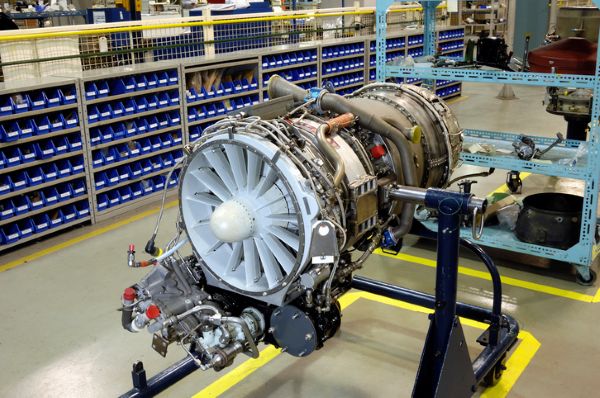
Aerospace spacers represent a critical category of precision components that maintain exact distances between parts in aircraft, satellites, and defense systems. We’ve manufactured aerospace spacers for NASA, Boeing, Lockheed Martin, and other industry leaders throughout our century-long history. These seemingly simple components must meet extraordinarily demanding specifications for tolerances, materials, and traceability.
The unique requirements of aerospace applications make standard commercial spacers inadequate for safety-critical assemblies. Weight optimization, vibration resistance, temperature extremes, and corrosive environments all demand specialty engineering. Every aerospace spacer we produce must meet AS9100 and ITAR standards with complete material traceability from mill to installation.
Learn more about how aerospace spacers differ from commercial alternatives and why these differences matter. By understanding aerospace spacer specifications, you’ll make informed decisions for your aircraft, spacecraft, or defense projects.
What Distinguishes Aerospace Spacers from Commercial Alternatives
Aerospace spacers must maintain dimensional stability over the temperature range from -65°F to +300°F encountered during flight operations. Commercial spacers may distort or permanently deform under these conditions, leading to misalignment in critical systems. Material selection focuses on the coefficient of thermal expansion matching to prevent differential movement between components.
Weight considerations drive aerospace spacer design since every ounce affects fuel consumption and performance margins. Aluminum and titanium spacers provide strength at 1/3 to 2/5 the weight of steel while maintaining structural integrity. Material removal through pocketing or hollow designs further optimizes weight while maintaining structural integrity under design loads.
Complete traceability documentation accompanies every aerospace spacer, including material certifications, dimensional inspection reports, and heat treatment verification. This paperwork trail enables root cause analysis if field failures occur during service. Commercial spacers rarely include such extensive documentation, making them unsuitable for certified aircraft.
AS9100 Compliance for Aerospace Spacers
AS9100 represents the quality management standard for aviation, space, and defense manufacturing across the supply chain. This certification extends ISO 9001 with aerospace-specific requirements for risk management, configuration control, and counterfeit part prevention. We’ve maintained AS9100 certification since 2008, demonstrating our commitment to aerospace quality standards.
The standard requires documented procedures for every manufacturing step from material receiving through final inspection and shipping. Process control monitors ensure machines remain in calibration, and operators maintain qualification through regular training.
Corrective action systems track any nonconforming products and implement preventive measures to eliminate root causes. This continuous improvement approach minimizes defects and ensures consistent quality across all production runs. Customers audit our AS9100 processes regularly to verify compliance with their specific quality requirements.
Types of Aerospace Spacers
Four primary categories encompass most aerospace spacer applications:
- Precision Shim Spacers: Ultra-thin aerospace spacers from .001″-.020″ thickness used for alignment adjustments in optical systems, sensors, and instrumentation where micron-level precision maintains critical tolerances in navigation and targeting systems
- Structural Round Spacers: Standard cylindrical aerospace spacers in .025″-.250″ thickness that distribute loads between fastened components, prevent crushing of composites, and maintain specified gap dimensions throughout the aircraft structure
- Custom Geometry Spacers: Non-circular aerospace spacers, including slotted, rectangular, and complex profiles, manufactured through EDM for unique packaging constraints in avionics bays and equipment racks with limited space
- Hollow/Tube Spacers: Weight-optimized aerospace spacers with material removed from centers, achieving substantial weight reduction while maintaining compressive strength for aircraft structural applications where every gram matters
Material selection and manufacturing processes vary by type to optimize performance characteristics. Each type demands different manufacturing approaches to maintain aerospace quality standards.
Aerospace Spacer Materials and Properties
Four materials dominate aerospace spacer manufacturing:
- 2024 Aluminum Alloy: High-strength aerospace aluminum offering excellent machinability and fatigue resistance for airframe structures, typically used in .032″-.125″ thickness with 70,000 PSI tensile strength for general structural applications
- 7075 Aluminum Alloy: Strongest aluminum alloy providing 83,000 PSI tensile strength for highly-loaded aerospace spacers where weight savings justifies slightly reduced corrosion resistance compared to 2024 alloy
- Titanium Grade 5 (Ti-6Al-4V): Premium aerospace spacer material with 130,000 PSI strength at 40% less weight than steel, essential for spacecraft, missiles, and performance aircraft structural joints requiring maximum strength-to-weight ratio
- 300 Series Stainless Steel: Corrosion-resistant aerospace spacers for hydraulic systems, fuel systems, and marine aircraft where saltwater exposure demands maximum rust prevention and long service life
These materials represent our most specified options for aerospace spacers, each offering distinct advantages. The material selection process weighs strength, weight, corrosion resistance, temperature limits, and cost. Our material specialists help customers optimize these trade-offs for specific applications based on decades of experience.
Critical Applications for Aerospace Spacers
Aircraft control systems use precision aerospace spacers to maintain exact clearances in linkages and actuators. These spacers ensure consistent control surface response throughout the flight envelope under all loading conditions. Any dimensional deviation could cause binding, excessive free play, or control anomalies affecting flight safety and pilot confidence.
Avionics bays require aerospace spacers to secure electronic equipment while isolating it from aircraft vibration. The spacers maintain equipment position despite turbulence, maneuvers, and landing impacts that generate significant shock loads. Proper spacing also facilitates airflow for cooling sensitive electronics in unpressurized environments at high altitudes.
Composite aircraft structures rely on aerospace spacers to prevent carbon fiber panels from crushing during fastener installation. The spacers distribute bolt clamping forces across larger areas, preventing localized compression that would damage the composite matrix. This application demands spacers with high compressive strength and controlled thickness tolerances.
Load Distribution in Composite Structures
Carbon fiber composites exhibit much lower bearing strength than aluminum, typically 40,000-60,000 PSI compared to aluminum’s 80,000-100,000 PSI. Aerospace spacers increase the bearing area to reduce point stresses below material limits through geometry optimization. Without proper spacers, fastener heads crush the composite surface, loosening joints and creating stress risers.
The ratio of the spacer outer diameter to the fastener diameter critically affects load distribution efficiency. Optimal ratios of 2.5:1 to 3:1 reduce bearing stress significantly compared to fastener-only contact. Too large a spacer becomes unwieldy and heavy, while an insufficient diameter fails to provide adequate stress relief.
Finite element analysis verifies aerospace spacer sizing before committing to production tooling and material procurement. We can simulate your specific fastener, composite layup, and loading conditions to recommend optimal spacer dimensions. This analysis-driven approach prevents over-engineering or undersizing that could compromise the assembly.
Manufacturing Processes for Aerospace Spacers
Precision blanking creates aerospace spacers from sheet material using hardened steel dies that maintain tight tolerances. This process economically produces high volumes of round spacers with tight dimensional control for common geometries. Die maintenance schedules ensure edge condition and dimensional accuracy don’t drift over production runs.
EDM (Electrical Discharge Machining) enables the production of complex geometry aerospace spacers that conventional stamping cannot produce. The process uses electrical spark erosion to cut intricate profiles, slots, and features with extreme precision. EDM produces zero burrs and maintains tolerances within ±.0005″ on any machinable conductive material.
CNC machining from bar stock suits lower-volume aerospace spacer production or very thick sections requiring multiple operations. This process offers unlimited geometric flexibility and can incorporate features such as threaded holes or counterbores. The material waste and cycle time make machining more expensive than stamping for simple geometries.
Quality Control and Inspection
Four inspection protocols ensure aerospace spacer quality:
- First Article Inspection: Complete dimensional verification of initial production samples against engineering drawings using calibrated measuring equipment, with documented results for customer approval before production begins
- In-Process Inspection: Statistical sampling throughout production runs to verify dimensional stability and catch any process drift before large quantities are affected by tooling wear or material variation
- 100% Final Inspection: Visual examination of every aerospace spacer for surface defects, burrs, and handling damage that could compromise performance or installation in critical aircraft systems
- Material Testing: Hardness verification, chemical analysis spot checks, and metallurgical examination to confirm material grade and heat treatment meet specifications with documented traceability
These inspection protocols ensure that aerospace spacers meet the exacting standards of aviation and defense applications. Documentation from each inspection stage provides the paper trail required for certified aircraft maintenance. Our quality system has been audited by major OEMs and approved for direct shipment to their assembly lines.
Tolerance Requirements for Aerospace Spacers
Four primary tolerance specifications control aerospace spacer quality:
- Thickness Tolerances: Typically ±.001″ for aerospace spacers in precision applications, with ±.0005″ achievable for critical assemblies requiring exact spacing with minimal stack-up variation in multi-component assemblies
- Diameter Tolerances: Inner diameter ±.001″ to ±.002″, ensuring proper fastener fit, outer diameter ±.005,” controlling bearing area and weight within design calculations for optimal performance
- Flatness Tolerances: .001″-.002″ total indicator reading across diameter, preventing cocking or uneven load distribution that could induce fastener bending moments and premature failure
- Parallelism Tolerances: .001″ per inch of diameter, maintaining uniform thickness across the part and preventing edge contact that creates stress concentrations in composite substrates
These tolerance specifications exceed commercial washer standards by 5-10x, reflecting aerospace performance demands. Tighter tolerances increase manufacturing costs through material selection, process control, and inspection requirements. Engineers must balance tolerance needs against budget constraints and functional requirements.
DFARS and ITAR Compliance
DFARS (Defense Federal Acquisition Regulation Supplement) mandates domestic sourcing for defense-related materials and components. All material used in aerospace spacers for defense applications must be melted, manufactured, and processed in the United States. We maintain DFARS-compliant material inventory and provide certification with every order.
ITAR (International Traffic in Arms Regulations) controls the export of defense and military technologies to foreign nationals. Many aerospace spacer designs and applications are subject to ITAR restrictions, requiring security clearances and export licenses. Our facility maintains ITAR registration and handles controlled technical data in accordance with government requirements.
Cage code 08555 identifies our company in the federal procurement system for aerospace and defense contracts. Government and prime contractor purchase orders reference this code for proper contract administration. Registration in SAM.gov validates our capability to fulfill government aerospace spacer requirements.
Design Considerations for Aerospace Spacers
Weight optimization drives aerospace spacer design more than any other factor in modern aircraft. Every pound removed from an aircraft improves fuel efficiency, increases payload capacity, or extends range significantly. Engineers specify minimum wall thickness and maximum material removal while maintaining structural requirements.
Vibration resistance requires aerospace spacers with sufficient mass and friction to prevent migration during service. Locking features, adhesive bonding, or specific surface finishes may be incorporated depending on the application. The spacer must maintain position through millions of vibration cycles without loosening or fretting wear.
Thermal expansion matching prevents differential movement between aerospace spacers and the surrounding structure during temperature cycling. Aluminum spacers pair well with aluminum structure, and titanium with titanium components. Mixed-material assemblies require careful analysis of thermal coefficients to prevent loosening or binding.
Get AS9100-Certified Aerospace Spacers
We’ve manufactured aerospace spacers for NASA, military contractors, and commercial aviation companies throughout our 100+ year history. Our AS9100 and ITAR certifications ensure quality and compliance for safety-critical applications. We maintain DFARS-compliant material inventory for defense contracts and provide complete traceability documentation.
Contact our aerospace team to discuss your spacecraft, aircraft, or defense spacer requirements.